
The Functional vs. Traditional Exercise Conundrum
The world of fitness is often characterized by a plethora of techniques and training methodologies, each with its unique advantages. Among these, the distinction between functional and traditional exercises has sparked discussions across gyms and fitness studios in the United States. This discourse comes at a time when individuals are continually seeking ways to improve not only their strength but also their overall performance in daily activities.
Functional exercises are designed to mimic real-life activities, promoting movements that enhance everyday functionality. They focus on engaging multiple muscle groups at once, which not only builds strength but also improves mobility, balance, and coordination. Some prime examples include:
- Squats: These enhance lower body strength and core stability, making it easier to perform activities like sitting down and standing up.
- Lunges: Effective in building leg strength while also improving balance and flexibility, they replicate movements such as walking or climbing stairs.
- Push-ups: This classic exercise strengthens the upper body while engaging the core, critical for various sports and daily movements.
- Deadlifts: These exercises are excellent for developing lower back strength and are vital for lifting heavy objects properly, thus reducing the risk of injury.
Contrastingly, traditional exercises typically involve isolation movements that target specific muscle groups, often utilizing gym machines or free weights. Their prime objective is usually muscle hypertrophy—essentially, increasing the size of the muscles. Common examples include:
- Bicep curls: These specifically target the bicep muscles, allowing for focused growth of the arms.
- Leg presses: This machine-based exercise isolates the quadriceps, providing a controlled environment for users to build leg strength.
- Bench presses: Focusing on the chest and triceps, this standard gym exercise is popular for developing upper body strength.
- Tricep extensions: Aimed at isolating the tricep muscles, this exercise enhances arm definition and strength.
As we delve deeper into the characteristics of each exercise type, it becomes evident that both have their strengths and weaknesses. Functional exercises generally excel in enhancing overall fitness applicable to daily life—making them especially valuable for athletes or those heavily involved in physical labor. On the other hand, traditional exercises can be pivotal for bodybuilders and those seeking to transform their physique, allowing for specific muscle growth and definition.
Understanding these differences is crucial for anyone embarking on a fitness journey. As you explore further, contemplate your personal goals, lifestyle, and what you hope to achieve in your training regimen. Whether you lean towards functional training, traditional workouts, or a blend of both, the key is finding the approach that resonates with you and supports your fitness ambitions.
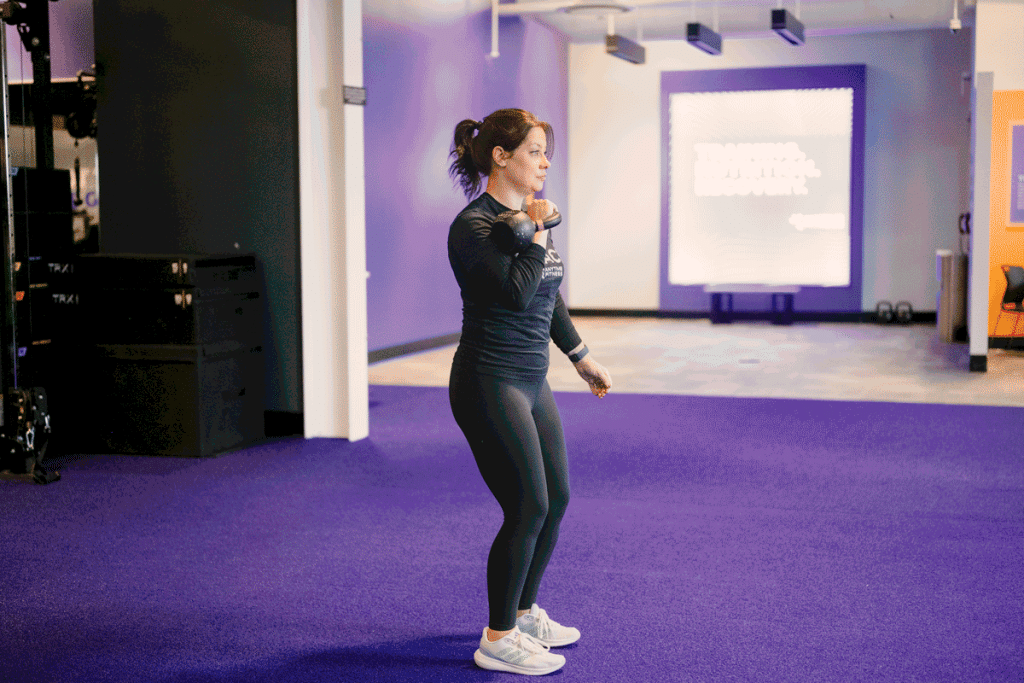
DIVE DEEPER: Click here to discover more
Understanding the Core Principles
At the heart of the functional vs. traditional exercises debate is the fundamental question of how we define strength and what aspects of our fitness we aim to improve. While both methodologies present unique benefits, their principles and applications diverge significantly. Functional exercises emphasize a holistic approach that addresses multiple aspects of fitness. They engage various muscle groups in unison, mimicking movements we perform in our daily lives—such as bending, lifting, and twisting. This multisystem engagement not only builds raw strength but also enhances physical capabilities and reduces the risk of injury.
For instance, performing functional movements like kettlebell swings or medicine ball throws can help an individual develop explosive power crucial for sports or activities ranging from sprinting to lifting objects overhead. This dynamic engagement is appealing to many fitness enthusiasts, particularly those seeking performance-enhancing results tied closely to their daily activities or sports. These movements not only build strength but also promote improved joint stability and flexibility.
In stark contrast, traditional exercises focus primarily on isolated muscle engagement. Often performed in a controlled environment using machines, they prioritize muscle hypertrophy—an increase in muscle size and definition. This isolation allows individuals to target specific muscles with precision. For example, seated cable rows and leg extensions specifically isolate the back and quadriceps, respectively, enabling more targeted improvements. While traditional exercises can indeed help individuals achieve substantial muscle growth, they might not provide the functional strength required in real-life scenarios.
Moreover, the adherence to traditional strength training can cultivate a certain aesthetic appeal, making it particularly attractive to bodybuilders and those with cosmetic fitness goals. However, focusing exclusively on isolated movements may lead to muscular imbalances over time, as certain muscle groups become disproportionately developed compared to others.
When evaluating the effectiveness of functional versus traditional exercises, it is essential to consider key factors such as:
- Goals: Are you aiming for improved everyday performance, weight loss, or muscle definition?
- Fitness Level: Are you a beginner looking for comprehensive strength, or are you an advanced athlete focused on enhancing specific muscle groups?
- Injuries: Are you recovering from an injury or seeking preventive measures against future injuries through improved functionality?
- Time Commitment: Do you have time for a versatile training regimen, or do you prefer a straightforward gym routine?
Ultimately, the choice between functional and traditional exercises may not be a matter of which is “better,” but rather which aligns more with your unique fitness aspirations. As you determine your pathway, recognizing your goals and understanding the benefits of both training methods can enhance not only your strength but your overall fitness experience. This awareness may empower you to create an informed and balanced approach to your fitness journey, integrating elements from both styles to achieve your desired results.
Exploring the Nuances: Functional vs. Traditional Exercises
As fitness enthusiasts continue to debate Functional vs. Traditional Exercises, understanding the intricacies of each approach is crucial for optimizing strength training. One key difference lies in the movement patterns emphasized by each type of exercise. Traditional exercises, such as the bench press or deadlift, often target specific muscle groups in isolation. In contrast, functional exercises, like kettlebell swings and squats, engage multiple muscle groups simultaneously, mimicking everyday movements and enhancing overall stability.Furthermore, research has suggested that functional exercises may provide better results in terms of building not only strength but also agility and coordination. For example, studies indicate that integrating functional training can improve athletic performance by promoting natural body mechanics. This is particularly beneficial for individuals looking to enhance their performance in sports or daily activities.It’s essential to consider individual fitness goals when choosing between these two approaches. Those aiming for hypertrophy may find traditional exercises more effective due to their ability to overload specific muscles. Conversely, individuals seeking to improve their functional capacity—needed for daily tasks—might lean towards functional movements that promote a full range of motion.The mental aspect also plays a role in the choice between functional and traditional exercises. Engaging in functional activities often involves a variety of movements that keep workouts exciting and dynamic. This variety can help maintain motivation, making it easier to stick to a fitness routine over time.Ultimately, whether one prefers functional training or traditional weightlifting, it’s clear that both have distinct advantages. A hybrid approach, which combines elements of both, could prove to be the most beneficial strategy for comprehensive strength development. Those curious about the effectiveness of integrating both methods may find remarkable improvements by focusing on a balanced fitness regimen.
| Category | Benefits |
|---|---|
| Traditional Exercises | Target specific muscles for growth; great for bodybuilders. |
| Functional Exercises | Enhance overall stability and coordination; mimic real-life movements. |
| Combination Approaches | Maximize strength; improve functional capacity; maintain motivation. |
As the conversation surrounding Functional vs. Traditional Exercises evolves, the growing recognition of their respective merits invites further inquiry into how best to implement these training styles in various fitness programs. The ultimate goal remains to empower individuals to achieve their strength-building objectives while enjoying a sustainable approach to exercise.
DISCOVER MORE: Click here to learn about the mental health benefits of cardio fitness
Exploring the Benefits of Each Approach
When diving deeper into the contrast between functional and traditional exercises, it’s crucial to recognize the distinct benefits each method offers. For instance, research has shown that integrating functional exercises into a workout regimen can yield significant improvements in overall athletic performance. A study published in the Journal of Strength and Conditioning Research highlights that athletes who incorporated functional exercises, such as deadlifts and squats, exhibited better agility, speed, and balance compared to those who followed a traditional weightlifting approach. This not only suggests enhanced performance capabilities but also reflects improved coordination—an essential element for both daily activities and athletic endeavors.
On the other hand, traditional exercises have a well-documented history of effectiveness when it comes to building pure muscle strength and size. According to a meta-analysis published in the Journal of Sports Sciences, traditional weightlifting techniques, especially those involving compound movements like bench presses and barbell squats, can result in substantial gains in muscle hypertrophy. This is particularly appealing to bodybuilders and fitness enthusiasts aiming for aesthetic goals. Furthermore, these exercises can also contribute to improved bone density and metabolic health, which are fundamental for longevity and general well-being.
Additionally, traditional strength training can be advantageous for beginners. The guided nature of machine-based exercises offers a safer entry point into fitness that can help newcomers develop basic strength and confidence in a gym environment. As one becomes familiar with the movements and equipment, they can gradually transition into more complex functional exercises that demand coordination and multi-joint engagement. This progressive build can be especially beneficial for older adults or individuals returning to exercise after an injury, affording them a route to regaining strength without overwhelming their bodies.
However, it’s not just the immediate benefits that warrant attention. Functional training also engages different muscle groups and even challenges the mind, contributing to enhanced proprioception. This means participants develop an improved sense of body awareness while performing daily tasks. Such integration of fitness into everyday movements can create easier and safer patterns for mundane actions like lifting grocery bags or standing up from a seated position—a concern as many age or face challenges with mobility. Furthermore, functional training often includes balancing and stability work that can help reduce falls and injuries among older populations, a significant consideration in health discussions in the United States today.
Among fitness aficionados, the journey through different training modalities may lead to a blend of functional and traditional exercises. Combining both worlds allows individuals to capitalize on the benefits of muscle growth while reaping the rewards of practical strength enhancements. By developing a training program that draws on the principles of both methodologies, one can create a well-rounded fitness routine tailored to diverse objectives.
The question ultimately pivots on individual goals and aspirations. The preferences rooted in performance enhancement, aesthetic targets, or functional capability influence how one may prioritize these exercise types. As you embark on your strength-building journey, consider how incorporating elements of each could lead to a comprehensive fitness experience that caters to body and mind.
DISCOVER MORE: Click here to get started on your cardio journey
Conclusion: Navigating Your Strength-Building Journey
As we unravel the comparative advantages of functional vs. traditional exercises, it becomes evident that neither approach holds a universal title as “better” for building strength. Instead, each methodology caters to specific lifestyles, fitness goals, and individual preferences. Functional exercises stand out for their ability to enhance athletic performance and improve coordination, offering holistic benefits that translate into everyday life and physical activities. They provide an engaging way to train the body as a cohesive unit, particularly valuable for those seeking to navigate the physical demands of daily tasks or reduce the risk of injuries.
Conversely, the effectiveness of traditional exercises in building muscle strength and size is well-supported through research and practical application. This method is particularly beneficial for those who prioritize aesthetic goals or seek a solid foundation in strength that can later evolve into more complex training regimens. The progressive nature of traditional strength training also offers a safe entry point for beginners and those returning from injury, allowing for confidence and competence to grow gradually.
Ultimately, the decision between functional and traditional exercises rests in the hands of the individual. Reflect on your personal goals—whether they revolve around athletic performance, body shaping, or functional capacity—and consider integrating elements from both realms. A balanced program can lead to a well-rounded fitness experience, fostering both strength and practicality. As you explore this compelling intersection of exercise modalities, you’ll undoubtedly discover that the journey toward a stronger self can be as diverse as the methods you choose to embrace.
Related posts:
Effective Recovery Strategies to Maximize Gains in Strength Training
The Impact of Strength Training on Mental Health and Well-Being
The Relationship between Strength Training and Injury Prevention in Athletes
Circuit-Based Strength Training Techniques to Enhance Efficiency
The Importance of Technique in Strength Training: Avoiding Injuries and Maximizing Results
How Nutrition Influences Muscle Development in Strength Training

Linda Carter is a writer and pet care expert specializing in pet health, grooming, and wellness. With extensive experience helping pet owners create safe, loving, and enriching environments for their animals, Linda shares her knowledge on our platform. Her goal is to empower readers with practical advice and strategies to ensure their pets thrive and lead joyful, healthy lives.